
The Samsung Ultra brand is usually reserved for devices that pack a lot of advanced features into one gadget. The Galaxy S23 Ultra starts at $1,200 and features a larger, sleeker OLED display, a new chip with better performance, a better camera, and some improved software. And of course, there's a built-in S Pen for all your drawing and note-taking needs. So while that sentiment generally applies to the new S23 Ultra, the company's latest flagship phone doesn't look or perform any differently than last year.
Appearance and Design: You have to blush to see the changes
The standard S23 and S23+ have been replaced this year, while the Ultra looks like a carbon copy of its predecessor unless you look closely. You get a large 6.8-inch AMOLED screen with an adjustable 120Hz refresh rate and 3088 x 1440 resolution. And even though those specs haven't changed much from the previous model, it still looks impressive. Colors are excellent and brightness reaches 1,750 nits, compared to the usual peak brightness of around 1,000 nits in my tests.
Supporters
- Good screen
- Built-in S Pen
- Excellent performance
- Improved camera
- Long battery life
Anti
- Duration
- The design is largely unchanged
- There are no new S Pen features
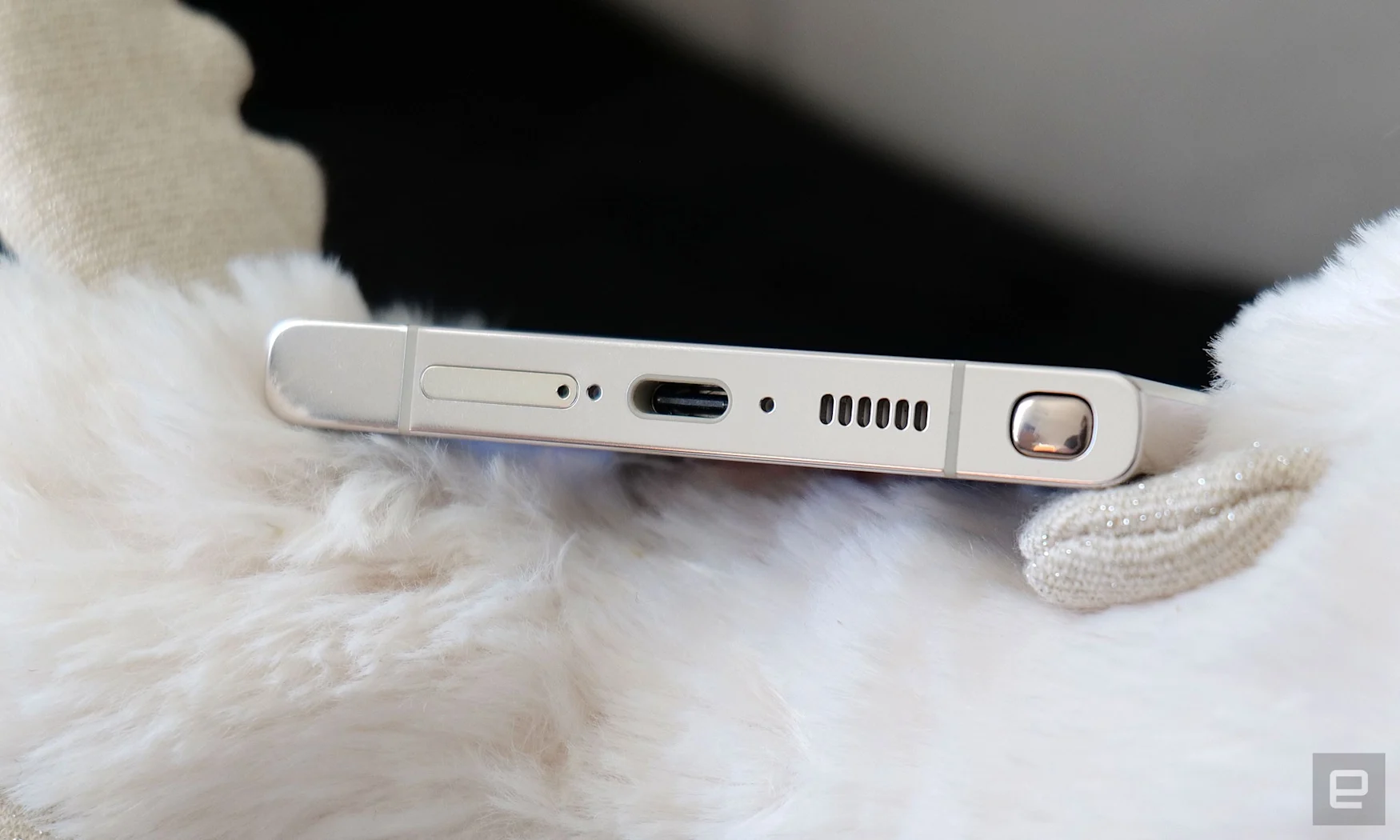
The rest of the phone is a nice combination of Gorilla Glass Victus 2 and Samsung's durable aluminum armor. There are some minor changes to the chassis, including slightly curved edges of the screen to prevent accidental touches. That said, I never had a problem with the phone last year. The S23 Ultra's frame is also a little flatter, making everything boxier. And thanks to Samsung's ongoing focus on sustainability, small parts of the phone, like the lock button, are made from marine-grade plastic. But that's how it is. So if you're not familiar with the S23 Ultra's new color options (including beige, lavender, green and black), it's almost impossible to tell the difference when looking at the S22 Ultra and S23 Ultra side by side. Divorced
Performance: A new chip means faster speeds.
The S23 Ultra was one of the first phones on the market with a Snapdragon 8 Gen 2 chip, but Samsung didn't stop there. He worked with Qualcomm to create a special version of the processor just for Galaxy phones. So what did you get? Simply put, a wealth of speed. In testing, the S23 Ultra posted a multi-core Geekbench score of 5 which is 40% higher than last year's phone. It's a big step forward, so it's no surprise when I tell you that everything is liquid: apps, games, everything.
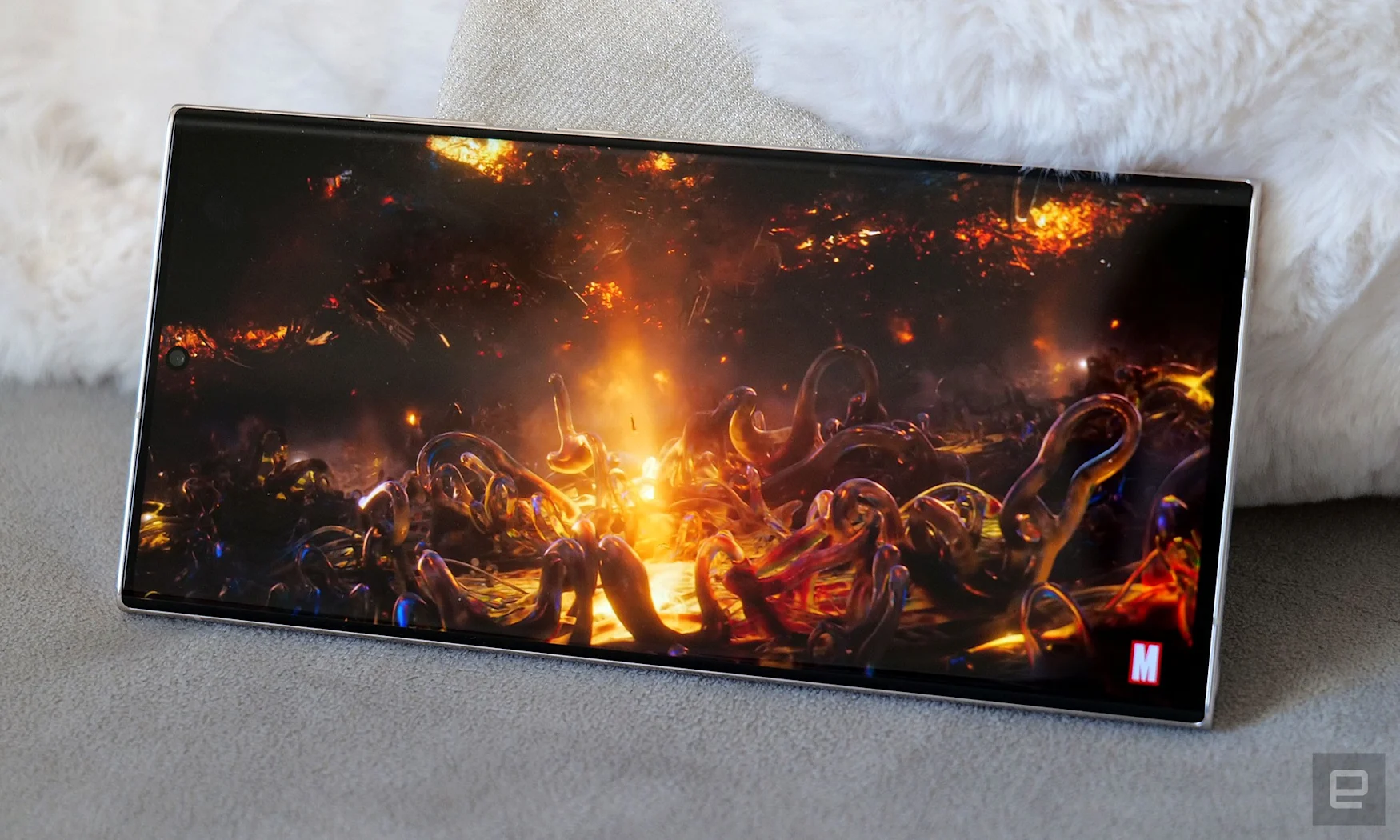
Now I should mention that the Snapdragon 8 Gen 2 clock speed is about 150 MHz higher than the stock chip, especially for the Galaxy platform that Samsung uses, which is not a difference that most people (including myself) will notice. to use. However, one of the big changes for 2023 is that every version of the Ultra will have a Snapdragon chip this year, meaning people outside of North America won't get the more powerful Exynos processors from before. The base model has 8GB of RAM and 256GB of storage, and you get 12GB of storage if you upgrade to the 512GB or 1TB storage options.
Software: A UI 5.1 is nice, but not essential.
Along with the launch of the Galaxy S23 line, Samsung is launching One UI 5.1 which includes important updates and tweaks. That said, additions like new lock screen customization options or a wider range are among the things we've already seen in iOS 16 or Android 13. You can also add information to the lock screen so that people can easily find your device if it's lost.
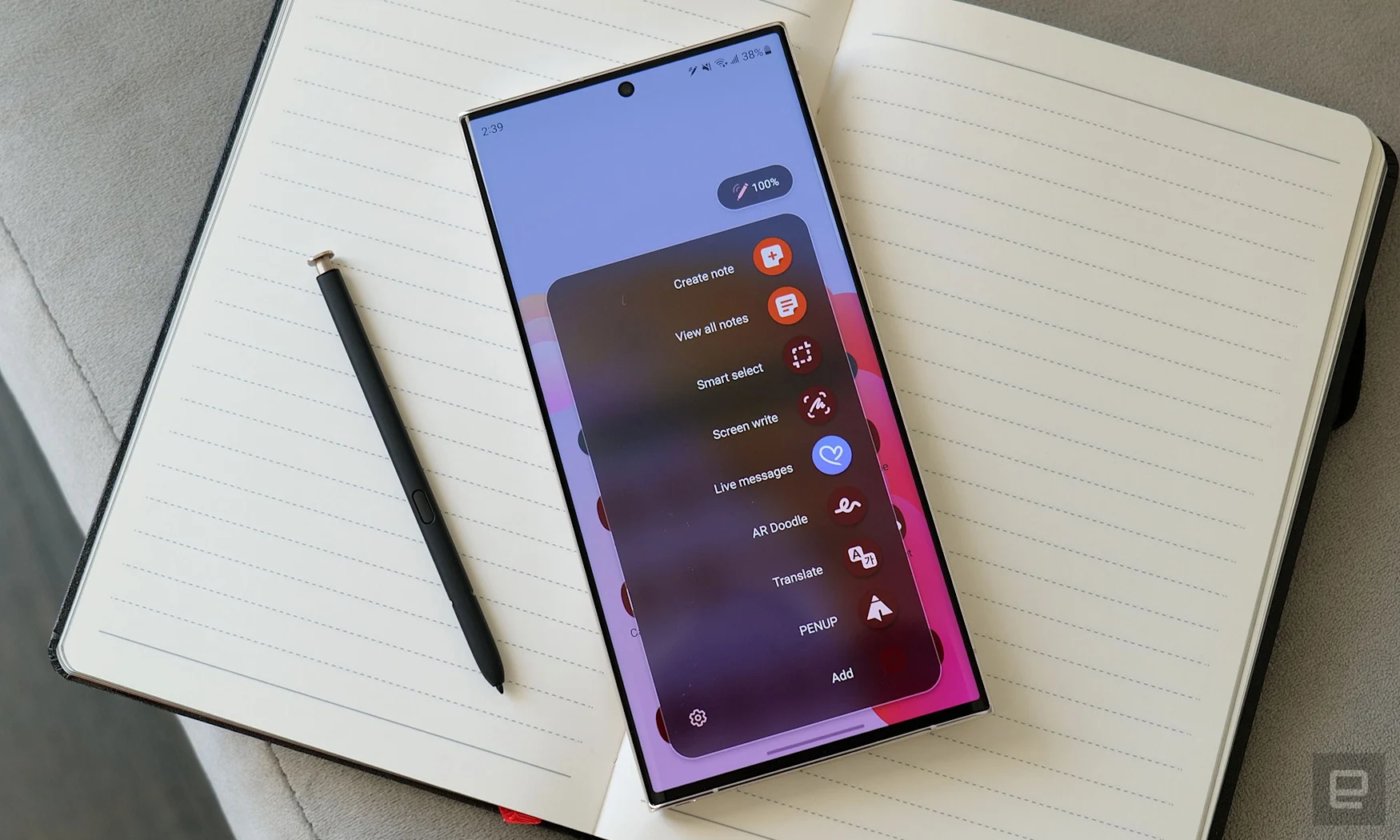
Samsung also makes it easy to create custom stickers from your photos, which you can do by simply long-pressing and dragging something to another app to share. Unfortunately, some problems are easier to solve than others. Faces and animals work well, but other things like flowers can often be slightly distorted, so your results may vary. In addition, there are new modes and routines in the menu, which allows the phone to adjust different settings for certain activities, such as exercise or relaxation. But aside from the sleep mode option, I didn't find this new feature particularly useful. When I'm working, I just have good music and I'm good to go.
Unfortunately, while the S23 Ultra has an S Pen and a good amount of storage, there are no new notes or drawing features, which is a shame. When it comes to stylus support on smartphones, Samsung's top phones are still weak, so I want something, not to add anything new. But I have to admit I'm struggling to think of one big feature I'd like to add.
Camera: Are more pixels better?
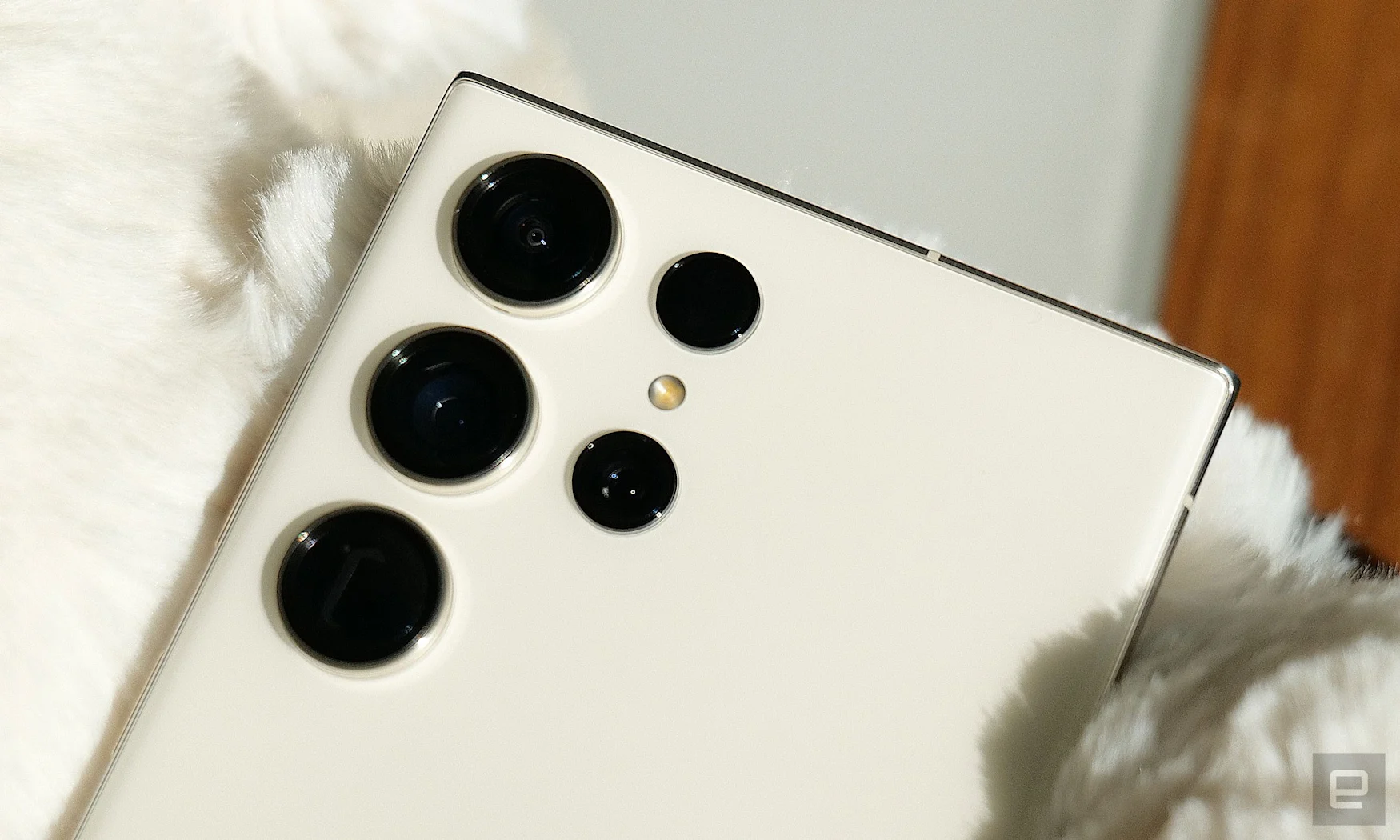
The S23 Ultra's biggest upgrade is the new 200MP main sensor, which is twice as large as before. In Samsung Unpacked, the company not only showcases short footage from two famous filmmakers to bring home the phone's new film capabilities. It sounds amazing, but getting the most out of the new sensor in practice takes effort.
In normal use, the S23 Ultra uses a 16-to-1 pixel ratio to help collect more light and produce clear, colorful images without the need for large file sizes. And in most cases it results in better looking photos. When I used the S23 Ultra to photograph some pizza (very tasty, I might add), images taken in the default 12MP mode had more accurate colors and better detail than those taken from the full 200-megapixel sensor. By enabling the sensor's full resolution in the right conditions, you can capture the smooth textures of some subjects, but you'll need to zoom in to see them.

Now, that part of Samsung's object detection and optimization doesn't seem to work in 200MP mode, but there's also a noticeable difference in white balance and sharpness. On the one hand, this makes sense, because professional photographers often choose images with a more color profile, which makes post-processing a little easier. But unless you're editing everything you use in an app like Lightroom or Photoshop, it means you're better off sticking with the standard 12MP setting. That's when I say you have to work to get the most out of the S23's new camera, and that's true of other things like Samsung's Expert Raw app as well.
Designed for more advanced photographers, Expert Raw has a wide range of settings and tools to adjust every aspect of your photography, from shutter speed, exposure compensation and more. If you don't live in a city like me, you'll get a new astronomy mode to take better pictures of the night sky. As a result, between the light pollution and the cloudy sky, I didn't manage to get any astrophoto shots that I was really proud of. And I use a tripod to make sure everything is very stable.
Gallery: Samsung Galaxy S23 ultra camera previews | 16 photos
Gallery: Samsung Galaxy S23 ultra camera previews | 16 photos
It's a similar story when it comes to video, where the S23 Ultra's improved OIS is welcome to reduce shake and judder when recording. But then the new 8K/30fps mode (compared to last year's 8K/24fps) is nice because it no longer has the 2X crop you get on the S22 Ultra. But at the same time, who has the right screen to watch home movies in 8K, let alone those clips in full resolution? Of course, it's nice to be able to cut a few extra details whenever you want. But that seems like overkill, especially when you consider that the file size of a two-minute 8K/30 FPS video is over a gigabyte, which means it ends up quickly .
At least when it comes to selfies, the phone has a new 12MP camera with dual-pixel autofocus, and photos look great despite the lower-resolution sensor than the previous model. The 12MP ultra-wide camera and two telephoto lenses (3x and 10x) are largely the same, which seems like a missed opportunity since 10x optical zoom is still my favorite lens on my phone.
Battery life: Very good
While the S23 Ultra's younger sibling has increased battery capacity, Samsung's flagship is 5000 mAh. But that's okay, because there's a lot of juice here. In our video test, the S23 Ultra lasted an impressive 19 hours and 26 minutes, which is about the same as the OnePlus 11 (19:45), but not as good as the iPhone 14 Plus' 21:17. And it works with the phone's adaptive refresh rate.
In the real world, you're looking at more than a full day of battery life. Even with heavy benchmarks and a day of NBA All-World play (which eats up electrons from constant GPS use), I had 25% battery left at the end of the day. And on days of more moderate use, I often had 40% or more left in the tank by midnight.
All of this means you don't have to worry about your phone shutting down during the day, which is a good thing because the S23 Ultra lets you share power with other devices via Samsung's Power Share (reverse charging wireless). - Function. And with a 45W wired charger, you can charge your phone in an instant.
give back
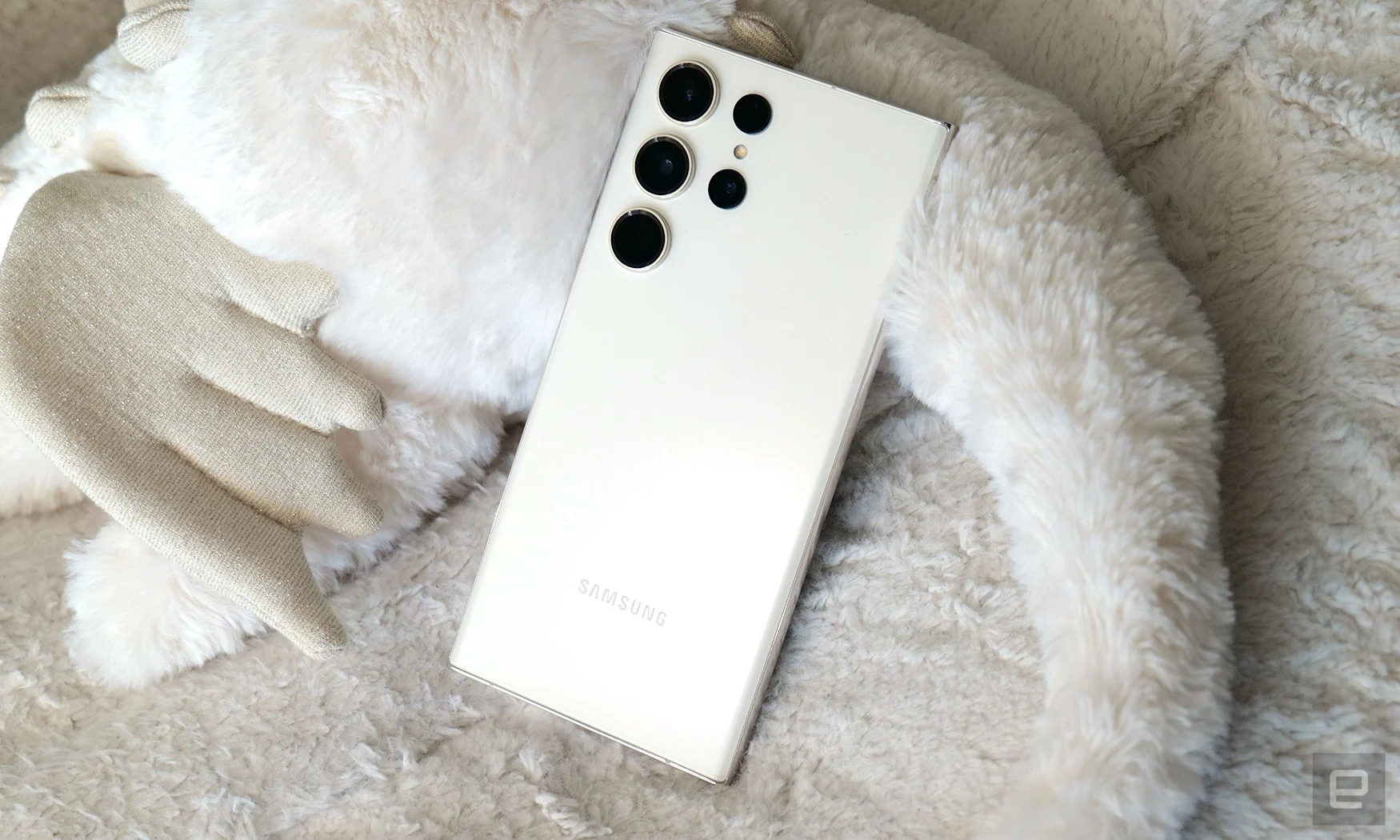
The hardest thing about recommending the S23 Ultra is that it's everything a super premium phone should be. It has a great screen, great build and more than enough power. But, starting at $1,200, it's super expensive and not much better than last year's offerings. I am sure you can capture Hollywood quality movies with the new 200 MP sensor. But it's important to remember that we're talking about a team with decades of experience in Samsung promotions, not to mention accessories like external microphones, camera cases, styluses, and more. The S23 Ultra's camera has a lot of potential, but it takes more than standard recognition to make the feature shine.
For those wondering if they should trade in their current phone after a year: No, it's not worth it. If you're looking for a premium device and don't want to take notes with a stylus, I think the Pixel 7 Pro is a better value. But if you have an older phone and are looking for a major upgrade, the S23 Ultra is unlike any other Android phone on sale today. And with its nifty new sensor, if you're looking to capture your content in post, Samsung's latest flagship might be the closest thing to a top-notch camera on a phone.
All products recommended by Engadget are selected by our editorial team, independent of our parent company. Some of our stories contain affiliate links. If you purchase something through one of these links, we may earn an affiliate commission. All prices were correct at the time of publication.
.png "Admin")